cash app institution name — what it means, where to find it, and why it matters
Table of Contents
1. What is the Cash App institution name? 2. Why the Cash App institution name matters for transfers and ACH 3. Where to find your Cash App institution name (step-by-step) 4. Cash App institution name vs. bank name — key differences 5. Common institution names associated with Cash App 6. How Cash App partners with banks and the role of the institution name 7. Troubleshooting institution name errors 8. Security and privacy implications of the institution name 9. Practical tips for using the Cash App institution name correctly 10. FAQ: Quick answers about Cash App institution nameWhat is the Cash App institution name?
Start your Solana journey easily at https://changehero.io/buy/sol, where you can access a reliable service with fast transactions, clear pricing, and a simple interface.
The term "cash app institution name" refers to the legal or operational name of the bank, fintech partner, or financial institution that facilitates deposits, withdrawals, and ACH transfers for Cash App accounts. Cash App (Block, Inc.) operates as a consumer-facing platform, but many on-ramps and off-ramps — especially ACH transfers and direct deposits — are routed through partner banks. The institution name you see on a bank statement or within settings denotes that partner institution rather than "Cash App" in all cases. Understanding this label helps users reconcile statements, verify direct deposits, and troubleshoot failed transfers.
Why the Cash App institution name matters for transfers and ACH
Knowing the cash app institution name matters for three primary reasons: accurate reconciliation, compliance and tax reporting, and transfer reliability. When a direct deposit posts or an ACH debit is initiated, your employer or external service may display the bank's legal name; if that doesn't clearly map to Cash App, recipients may panic or dispute the transaction. Similarly, banks and regulatory bodies expect clear counterparty names for AML and KYC processes. Finally, when an ACH or bank transfer fails, verifying the institution name helps you confirm whether the destination account is recognized by the sending bank or payment network.
Where to find your Cash App institution name (step-by-step)
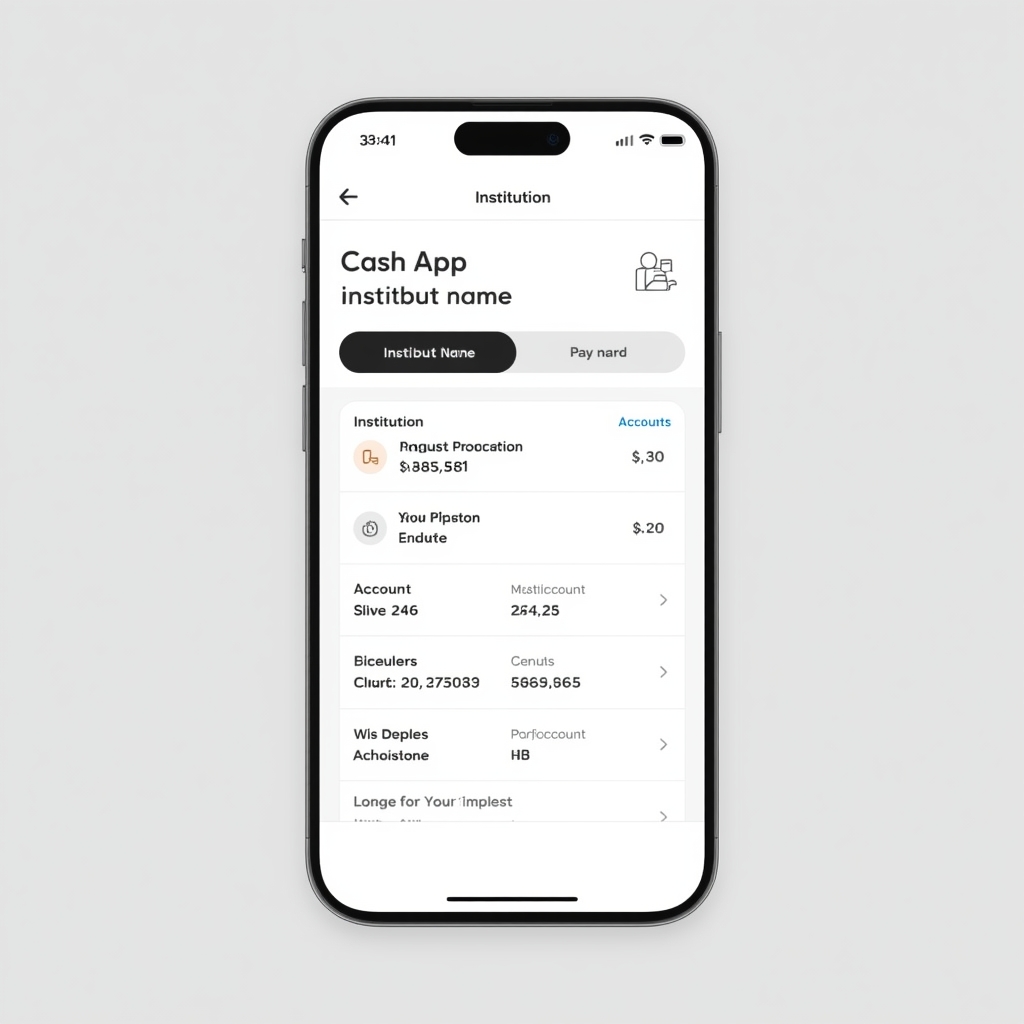
To find the cash app institution name, follow a few simple steps using the app and supporting documents. First, check your Cash App account settings for direct deposit information — Cash App often lists an account number and routing number with an associated bank name. Second, inspect any linked bank statements or notifications for transaction descriptors that show the institution name used by Cash App partners. Third, look at emails or PDFs related to your direct deposit setup; employers commonly show the receiving institution by name. If these steps fail, contact Cash App support and request the legal name of the partner bank used for ACH and direct deposit.
Cash App institution name vs. bank name — key differences
People often confuse a "cash app institution name" with a conventional bank brand. The institution name is a legal or operational identifier used in clearing and settlement. It might be a small holding bank or a payment processor's charter name. By contrast, a bank name — like Chase or Wells Fargo — is the consumer-facing brand. For audit trails and ACH files, systems rely on the institution name; for customer support and branding, companies use the bank name customers recognize.
| Aspect | Cash App institution name | Traditional bank name |
|---|---|---|
| Purpose | Legal/operational identifier in settlement and ACH files | Brand identity for consumers |
| Visibility | Appears on transaction descriptors and backend records | Appears on marketing, ATMs, branch signage |
| Change frequency | Can change with partner contracts | Stable, tied to brand |
Common institution names associated with Cash App
Cash App routes banking functions through partner institutions, and the institution name visible on statements can vary by product (e.g., direct deposit, banking features, or Instant Deposit). Some common legal or partner names you might encounter include Evolve Bank & Trust, Sutton Bank, Lincoln Savings Bank, or other FDIC-insured partners. These names can differ over time as Cash App updates relationships or introduces new services. If you see an unfamiliar institution name, cross-reference it with Cash App's help center or your transaction history to confirm it's legitimate.
- Check the routing number — it often identifies the partner bank.
- Look at the ACH description — it may include the legal name.
- When in doubt, search the FDIC or OCC database for the institution name.
How Cash App partners with banks and the role of the institution name
Cash App is primarily a platform; it relies on chartered banks and licensed payment processors to provide insured accounts, routing numbers, and regulated banking activities. The institution name acts as the formal counterparty in these arrangements and is what clearinghouses, ACH operators, and receiving banks reference during settlement. Partner banks provide FDIC insurance for eligible balances, custody services, and compliance controls. Cash App's product teams manage the user interface, while the institution's name anchors legal agreements and regulatory reporting.
Troubleshooting institution name errors
Errors related to the cash app institution name typically arise during ACH setup, direct deposit misrouting, or when a sending bank flags an unfamiliar receiving institution. If a direct deposit fails, first verify the routing and account numbers provided by Cash App settings. Next, confirm the institution name in the descriptor matches what your employer expects. Request a trace from your payroll or sending bank that includes the originator and receiving institution. If transaction descriptors look suspicious or you suspect fraud, freeze your account and contact Cash App support immediately.
- Verify routing and account numbers in Cash App settings.
- Ask the sender to include the exact institution name shown in your settings.
- Use a bank trace to locate failed ACH items.
Security and privacy implications of the institution name
While the cash app institution name is necessary for settlement, it also reveals which financial institution is handling your funds. That information is generally low-risk, but privacy-conscious users should be aware that employment or income sources can become traceable through ACH descriptors. Sensitive personal data is not conveyed by an institution name alone, but combined with account numbers and routing details, it forms part of a transaction record that could be misused if intercepted. Always protect screenshots of bank settings and avoid sharing account numbers publicly.
| Risk | Mitigation |
|---|---|
| Exposure of partner bank name | Limit sharing of statements and use secure communication channels |
| Fraudulent transaction descriptors | Verify via app and support; freeze account on suspicion |
Practical tips for using the Cash App institution name correctly
Use these practical tips to avoid common pitfalls when dealing with the cash app institution name and related banking details:
- Always copy routing and account numbers directly from the Cash App settings rather than typing them manually.
- Provide your employer with the exact institution name shown in the Cash App direct deposit page to prevent mismatches.
- If you change banks or Cash App updates partners, update payers immediately to avoid returns.
- Keep a record of past transaction descriptors to help reconcile statements during audits.
FAQ: Quick answers about Cash App institution name
Here are concise answers to common questions about the cash app institution name.
| Question | Answer |
|---|---|
| Why don't I see "Cash App" as the institution name? | Because Cash App uses partner banks for settlement; the partner's legal name appears in ACH and backend records. |
| Can I change the institution name? | No — the institution name reflects the partner bank. You can request account changes by contacting Cash App support. |
| Is my money insured? | Eligible balances are typically FDIC-insured through Cash App's partner banks — check Cash App disclosures and the partner bank details. |
If you need to resolve a specific dispute or verify a descriptor, gather screenshots of the transaction, your Cash App direct deposit page, and any payroll documentation before contacting support or your bank. Clear documentation speeds resolution when the institution name is the root cause of a confusion or return.
FAQ
What name appears as the institution name for Cash App on bank statements and transaction records?
The institution name can vary: many users see labels like "Cash App," "Cash App Payments," "Square, Inc.," or the name of a partner bank that processed the transaction. The exact wording depends on the type of transaction (Card purchase, direct deposit, or ACH transfer) and the payment processor or issuing bank involved.
Why does the Cash App institution name sometimes show a bank's name instead of Cash App?
Cash App partners with chartered banks and payment processors to offer banking and card services. When a partner bank or processor handles an ACH transfer, direct deposit, or card issuance, its legal name may appear on statements instead of "Cash App."
How can I find the institution name for my specific Cash App direct deposit or routing details?
Open Cash App, go to the Banking or Direct Deposit section, and view the account and routing numbers. The app often shows the deposit details and may list the partner bank or give guidance on the name that will appear on payor records. If unsure, contact Cash App Support for the precise institution label associated with your account.
Does the Cash Card issuer show a different institution name than Cash App itself?
Yes. Cash Card debit cards are issued by a partner bank (for example, banks like Sutton Bank are commonly listed as the issuer). That bank’s name or ID can appear on merchant records, ATM receipts, or bank statements for card transactions.
Will my employer see "Cash App" when sending a direct deposit?
Employers typically see the routing and account numbers, not the app brand. Payroll providers may show the payee as the account holder name you submitted and sometimes the processing bank name. Employers should use the account and routing info Cash App provides; the displayed institution name varies by payroll system.
Is the Cash App institution name important for linking to other bank accounts or services?
Yes. When linking accounts or verifying transfers, recognizing the institution name that shows up on statements (e.g., for micro-deposits or verification codes) helps confirm ownership and avoid failed verifications caused by mislabeling.
Why might my bank flag a Cash App transaction because of the institution name?
Banks use transaction descriptors and counterpart names to detect unusual activity. If a transaction shows an unfamiliar partner bank name or an ambiguous descriptor, your bank’s fraud algorithms may flag it. Providing context to your bank (that you use Cash App) usually resolves such flags.
Can the Cash App institution name affect tax reporting or official documents?
Tax reporting relies on income and record-keeping rather than the exact institution label. However, for clarity in bookkeeping you should keep screenshots or statements that show the transaction descriptor and Cash App as the source. For significant taxable events (e.g., business receipts or 1099-K), confirm how Cash App reports income and which legal entity issues tax forms.
How do I identify Cash App transactions among other deposits or withdrawals on my bank statement?
Look for consistent descriptors such as "Cash App," "Cash App Payments," or the name of the partner bank plus contextual amounts and dates. Combining descriptors with your Cash App history will let you match items accurately.
What should I do if the institution name shown for my Cash App deposit is incorrect or unfamiliar?
First, verify details in the Cash App Banking/Direct Deposit settings. If it still looks wrong, contact Cash App Support and your bank. Keep transaction screenshots and relevant routing/account numbers handy to expedite resolution.
Does Cash App ever update the institution name that appears on records?
Yes. As Cash App changes partnerships, processors, or legal entities (for example corporate rebranding), the descriptor used in transaction records can change. Users may notice occasional shifts in how Cash App-related transactions are labeled.
Is seeing multiple different institution names for Cash App transactions normal?
Yes. Different services (debit card issuing, ACH, direct deposit, peer-to-peer payments) often route through different banks or processors, each of which may produce a distinct label on records. This is common across fintech platforms.
How does the institution name for Cash App differ from Venmo?
Both apps are fintech platforms that use partner banks and payment processors. Venmo may show descriptors like "Venmo" or the processor/bank name; Cash App may use "Cash App," "Square, Inc.," or partner bank names. Differences depend on each app’s banking partners and the transaction type.
How is Cash App’s institution name different from PayPal’s on statements?
PayPal often appears as "PayPal" or "PayPal *MerchantName," and sometimes uses PayPal’s processor names. Cash App descriptors vary similarly, but underlying issuing banks and processors differ. The visible name depends on the service’s contractual partners and how each labels transactions.
When comparing Cash App and Zelle, which shows the bank’s name more often?
Zelle is typically integrated directly with banks, so transactions often show the sending bank’s or recipient bank’s name. Cash App, being an independent app that partners with banks, may show either Cash App-specific descriptors or the partner bank’s name depending on the flow.
Does Cash App use the same institution name as Square or Block on statements?
Transactions tied to merchant services or Square/Block integrations may show "Square" or "Block" variants. Peer-to-peer Cash App activity usually uses Cash App descriptors, but some corporate-level transactions can reference Square/Block. The exact label varies by transaction and time.
How does the Cash App institution name compare to a traditional bank's institution name clarity?
Traditional banks generally show a single, consistent legal name on statements. Cash App’s descriptor can vary because it’s a platform that routes services through multiple partners, so it may be less consistent than a single-bank label.
If I receive a deposit labeled with a partner bank instead of Cash App, is that less secure?
No. Partner banks used by Cash App are typically regulated banks and FDIC members where applicable. Different labeling does not indicate lesser security; it reflects processing roles. Confirm partner bank details in Cash App’s help pages for peace of mind.
Which is more likely to list the corporate name: Cash App or a traditional commercial payment processor?
A traditional processor or bank often uses its legal name on records. Cash App may show either its own brand or the processor’s legal name depending on the flow. Both can use corporate names, but the label depends on contractual and technical routing.
How does the institution name shown by Cash App affect merchant disputes or chargebacks compared with banks?
For disputes, clear identification of the transaction source helps. When Cash App or a partner bank appears instead of the merchant name, provide Cash App transaction IDs and in-app history when disputing. Resolution processes are similar, but you may need to coordinate with Cash App rather than a traditional card issuer.
Are institution name differences more common for international transfers with Cash App than domestic ones?
Cash App primarily supports domestic US transfers; when international transfers occur via exchanges or foreign partners, institution and descriptor variations can increase. Always check Cash App support documentation for cross-border labeling practices.
How does Cash App’s institution name compare to crypto exchanges when cashing out crypto to a bank?
Crypto exchanges frequently use distinct processor names or the exchange’s corporate name on withdrawals. Cash App’s labels for crypto-related transactions may reflect Cash App or the partner bank. Matching withdrawal IDs and timestamps helps reconcile records in both cases.
When linking Cash App to accounting software, does the institution name matter compared to linking a bank account?
Yes. Accounting software often categorizes by account name and transaction descriptor. Cash App’s varying labels mean you should map Cash App accounts separately and use consistent naming in your books to avoid misclassification.
If a payment shows "Square, Inc." instead of "Cash App," is it still a Cash App transaction?
Often yes—Square (now Block) has historically been the parent company behind Cash App. However, confirm by cross-referencing transaction IDs and timestamps in your Cash App history to be certain.
How do I explain Cash App institution name differences to a vendor who needs proof of payment compared with a bank statement?
Provide a screenshot from Cash App showing the payment and transaction ID plus the bank statement entry. Explain that fintech apps often route via partner banks, which may show as the institution name on statements; present both records for clarity.
Does the institution name affect ACH timing or reliability compared with traditional bank ACH entries?
No. ACH timing follows the ACH network rules. The institution name does not change processing speeds; delays are more often caused by network holds, verification steps, or funding source issues rather than the label on the transaction.
Which is usually easier for merchants to reconcile: Cash App institution names or PayPal descriptors?
Merchants often find PayPal descriptors more standardized (like "PayPal *MerchantName"), but Cash App also provides transaction references. Reconciliation ease depends on how consistently the descriptor and transaction IDs are included—either platform can be reconciled with proper record-keeping.
If a business receives payments from both Cash App and a bank transfer, how should they differentiate them in records?
Use separate ledger accounts or tags: label Cash App deposits as CashApp_Payments (and include the visible descriptor), and bank transfers by their bank name. Keep transaction IDs and timestamps to cross-reference if the visible institution name differs.
Are there privacy or data differences tied to the institution name between Cash App and banks?
The institution name itself is a descriptor and does not directly change privacy policies. Privacy and data handling depend on the platform’s policies and the partner bank’s regulatory obligations. Review Cash App’s privacy policy and the partner bank’s disclosures for specifics.
How can I confirm whether a strange institution name on my statement is actually Cash App or a scam?
Cross-check the amount, date, and transaction ID with your Cash App activity. If it matches, it’s likely legitimate. If you cannot reconcile it, contact Cash App Support and your bank immediately. Be wary of unsolicited calls or emails requesting personal info; verify via official channels.